
Finding a top Montessori school can feel like a major decision, because it is. The Montessori method has educated children for over a century, and today’s parents have more options than ever. But how do you separate the truly excellent programs from schools that simply use the Montessori name?
This guide breaks down what makes top Montessori schools stand out, the features you should look for, and practical steps to evaluate programs in your area. Whether you’re exploring Montessori for the first time or comparing your final options, you’ll find actionable insights to help you choose the right fit for your child.
Table of Contents
ToggleKey Takeaways
- Top Montessori schools feature AMI or AMS-certified teachers, mixed-age classrooms, and prepared environments designed for child-led learning.
- Look for uninterrupted work periods of two to three hours, which allow children to develop deep concentration and focus.
- Schedule observation visits and watch for engaged children working independently in calm, organized classrooms with accessible materials.
- Quality Montessori programs assess progress through detailed observation rather than standardized testing, reducing stress while capturing full development.
- Children in top Montessori schools develop strong academic skills, independence, executive function, and a genuine love of learning that lasts beyond school years.
What Makes a Montessori School Stand Out
Not all Montessori schools are created equal. The name “Montessori” isn’t trademarked, which means any school can use it. This creates a wide range in quality. A top Montessori school follows the core principles developed by Dr. Maria Montessori while adapting to modern educational needs.
Authentic Montessori programs share several characteristics. They use mixed-age classrooms, typically spanning three years. This setup allows younger children to learn from older peers, while older students reinforce their knowledge through teaching. It’s a natural way to build social skills and academic confidence.
The best Montessori schools also employ trained Montessori teachers. Look for credentials from AMI (Association Montessori Internationale) or AMS (American Montessori Society). These certifications require extensive training in Montessori philosophy and hands-on practice.
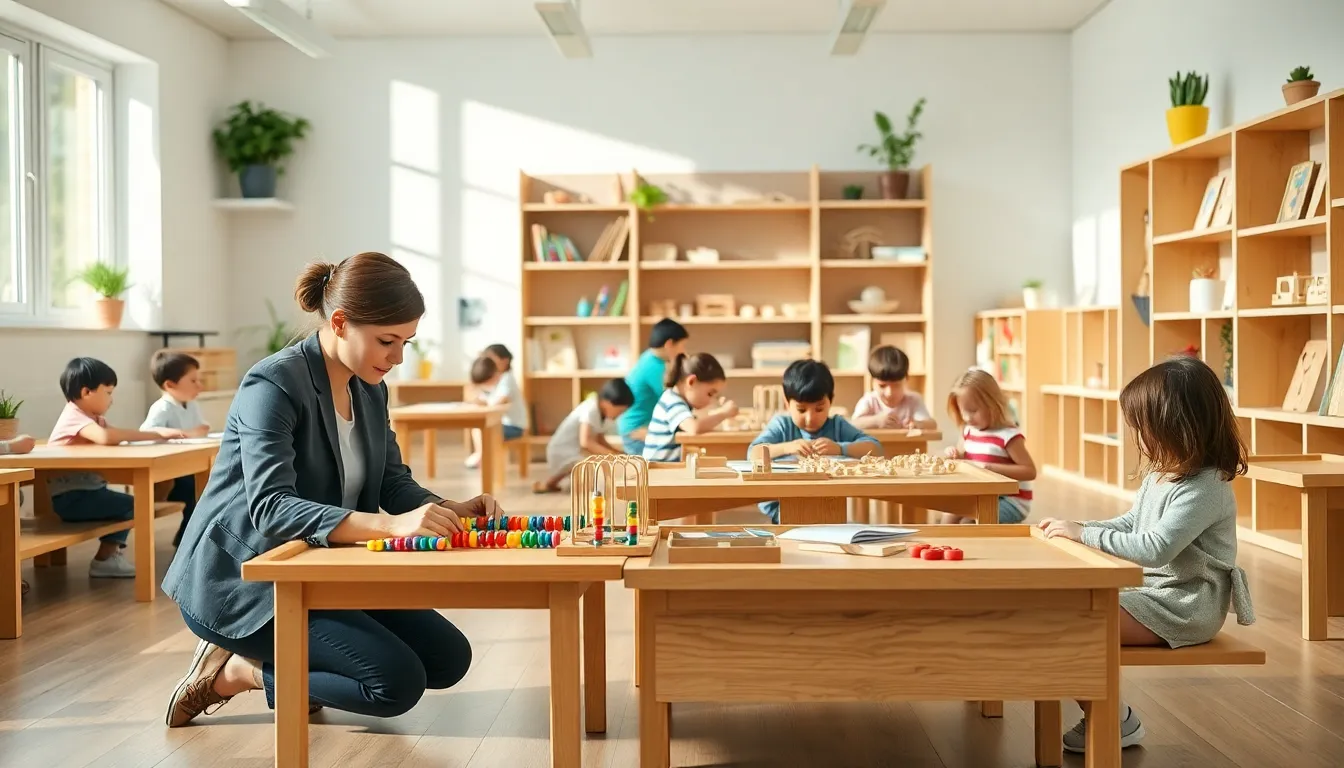
Another hallmark of top Montessori programs is the prepared environment. Classrooms feature child-sized furniture, accessible materials, and organized work areas. Everything has a purpose. Children move freely, choose their activities, and work at their own pace. This independence builds self-discipline and intrinsic motivation.
A standout Montessori school also maintains low student-to-teacher ratios. This allows teachers to observe each child closely and provide individualized guidance. Quality matters more than prestige, a smaller, well-run program often outperforms a larger one with more resources.
Key Features of Top-Rated Montessori Programs
Top Montessori programs share specific features that set them apart from average schools. Understanding these features helps parents make informed decisions.
Uninterrupted Work Periods
Children in top Montessori schools receive extended blocks of uninterrupted work time, typically two to three hours. This allows them to enter deep concentration, complete tasks, and develop focus. Short, choppy schedules interrupt this process and reduce learning effectiveness.
Hands-On Learning Materials
Montessori classrooms use specially designed materials. These include sandpaper letters for tracing, bead chains for math concepts, and puzzle maps for geography. Each material isolates one skill and includes built-in error correction. Children learn through touch and manipulation, not just observation.
Child-Led Learning
Teachers in top Montessori programs act as guides rather than lecturers. They observe each child’s interests and introduce new materials at the right moment. Children choose their work within a structured framework. This approach respects individual learning styles and paces.
Community and Practical Life Skills
Quality Montessori schools integrate practical life activities into daily routines. Children learn to pour water, prepare snacks, clean up spills, and care for plants. These tasks build coordination, concentration, and responsibility. They also create a sense of community within the classroom.
Assessment Through Observation
Top Montessori schools avoid traditional testing for young children. Instead, teachers document progress through detailed observation notes and portfolios. This method captures a fuller picture of each child’s development without the stress of standardized exams.
How to Evaluate Montessori Schools in Your Area
Finding top Montessori schools near you requires research and in-person visits. Start by creating a list of accredited programs in your area. Check for AMI or AMS accreditation, which indicates adherence to Montessori standards.
Schedule observation visits whenever possible. Many Montessori schools welcome parents to observe a regular classroom session. This gives you a realistic view of daily operations.
During your visit, watch how children interact with materials and each other. Do they appear engaged? Are they moving purposefully around the room? A well-functioning Montessori classroom has a calm, focused energy. Children work independently or in small groups without constant adult direction.
Pay attention to the physical space. Materials should be organized, clean, and accessible to children. The room should feel inviting but not cluttered. Natural light and neutral colors are common in authentic Montessori environments.
Speak with current parents if possible. Their experiences reveal important details about communication, community involvement, and how the school handles challenges.
Questions to Ask During Your School Visit
Prepare specific questions before your visit. Here are key ones to consider:
- What Montessori training do your teachers hold?
- What is the student-to-teacher ratio?
- How long are uninterrupted work periods?
- How do you communicate with parents about child progress?
- Is your school accredited by AMI, AMS, or another recognized body?
- How do you handle transitions to traditional schools if needed?
The answers reveal whether the school truly implements Montessori principles or simply uses the name. Top Montessori schools answer these questions confidently and welcome your curiosity.
Benefits of Choosing a Quality Montessori Education
Selecting a top Montessori school offers lasting benefits for children. Research supports many advantages of the Montessori method when implemented correctly.
Academic Achievement
Studies show Montessori students often perform as well or better than peers in traditional schools on standardized tests. More importantly, they tend to develop strong reading, writing, and math skills through hands-on experience rather than rote memorization.
Social and Emotional Development
Mixed-age classrooms in top Montessori programs foster cooperation over competition. Children learn conflict resolution, empathy, and leadership naturally. Older students mentor younger ones, building confidence on both sides.
Independence and Self-Discipline
Montessori education emphasizes internal motivation. Children learn to manage their time, make choices, and complete work without constant external rewards. These skills transfer to later academic and professional settings.
Love of Learning
Perhaps the most significant benefit: children in quality Montessori schools often develop a genuine love of learning. They ask questions, explore interests deeply, and view education as discovery rather than obligation. This mindset serves them well beyond their school years.
Executive Function Skills
Top Montessori programs strengthen executive function, the mental skills that help children plan, focus, and manage multiple tasks. The prepared environment and self-directed work naturally develop these cognitive abilities.

