
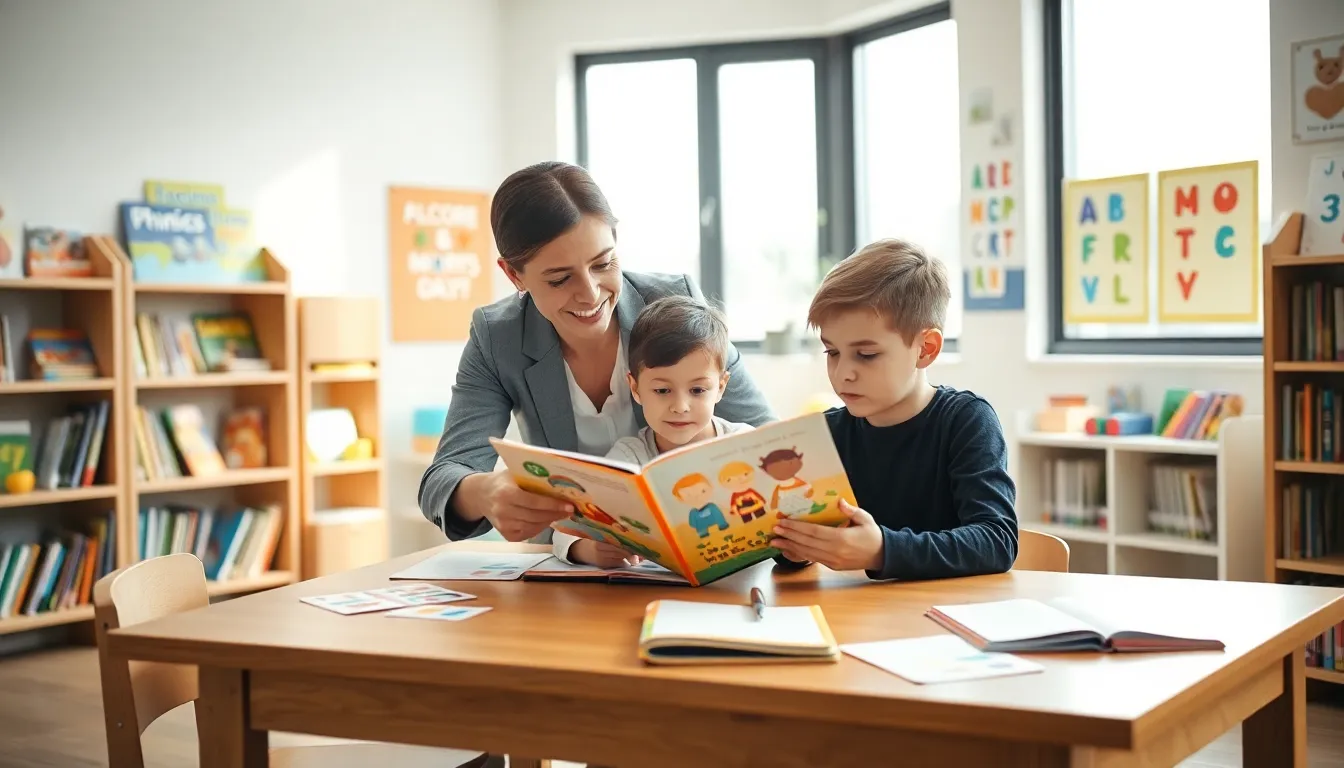
Reading and literacy development techniques form the foundation of lifelong learning. Whether someone is a toddler sounding out their first words or an adult brushing up on comprehension skills, the right strategies make all the difference. Strong literacy opens doors, to education, career opportunities, and personal growth.
This guide breaks down proven methods for building reading skills at any stage. From phonemic awareness to critical thinking, these techniques help learners become confident, capable readers.
Table of Contents
ToggleKey Takeaways
- Phonemic awareness and systematic phonics instruction are foundational reading and literacy development techniques that benefit learners of all ages.
- Active vocabulary engagement—through read-alouds, wide reading, and word games—directly improves reading comprehension.
- Fluency develops through repeated reading, echo reading, and practicing with texts at an appropriate difficulty level.
- Strong comprehension requires active engagement before, during, and after reading, including previewing, self-monitoring, and summarizing.
- A print-rich environment with accessible books and modeled reading behavior encourages lifelong literacy habits.
- Giving readers choice in their materials and creating positive associations with books builds intrinsic motivation to read.
Building Phonemic Awareness and Phonics Skills
Phonemic awareness is the ability to hear and manipulate individual sounds in words. It’s one of the earliest reading and literacy development techniques children need. Before kids can connect letters to sounds, they must recognize that words break into smaller sound units.
Simple activities build this skill quickly. Rhyming games teach children to identify similar ending sounds. Clapping out syllables helps them hear word parts. Asking a child to identify the first sound in “cat” or “dog” strengthens their ear for phonemes.
Phonics takes this further by linking sounds to written letters. Systematic phonics instruction teaches letter-sound relationships in a clear, sequential order. Research consistently shows that explicit phonics instruction produces better reading outcomes than implicit approaches.
Effective phonics practice includes:
- Letter-sound drills: Flash cards or apps that reinforce connections
- Blending exercises: Combining sounds like /c/ /a/ /t/ into “cat”
- Decodable readers: Books with words matching taught phonics patterns
For older learners or adults, phonics review can fill gaps from earlier instruction. Many struggling readers benefit from returning to these fundamentals.
Expanding Vocabulary Through Active Engagement
Vocabulary knowledge directly predicts reading success. Readers who know more words understand more of what they read. Active engagement beats passive exposure every time.
Reading aloud to children remains one of the most powerful reading and literacy development techniques available. It exposes them to words they wouldn’t encounter in everyday conversation. Picture books, chapter books, and non-fiction all introduce new vocabulary in context.
For independent readers, wide reading across genres builds word knowledge naturally. Someone who reads science articles, historical fiction, and poetry encounters different vocabulary sets. This variety matters.
Direct vocabulary instruction also plays a role. Teaching word roots, prefixes, and suffixes gives learners tools to decode unfamiliar words. Knowing that “bio” means life helps someone figure out “biology,” “biography,” and “biodegradable.”
Active strategies for vocabulary growth include:
- Keeping a vocabulary journal with new words and definitions
- Using new words in conversation or writing within 24 hours
- Playing word games like Scrabble, crosswords, or vocabulary apps
- Discussing word meanings during read-alouds
Context clues deserve attention too. Teaching readers to use surrounding sentences to infer meaning builds independence.
Strengthening Reading Fluency With Practice Strategies
Fluency connects decoding skills to comprehension. Fluent readers recognize words automatically, read with appropriate speed, and use expression. When reading flows smoothly, mental energy goes to understanding rather than sounding out words.
Repeated reading is a research-backed fluency technique. A reader practices the same passage multiple times until they reach a target speed and accuracy level. This builds automaticity with high-frequency words and common phrases.
Echo reading helps developing readers. An adult reads a sentence aloud, then the child reads the same sentence back. This models proper pacing, intonation, and expression. Choral reading, where everyone reads together, offers similar benefits in group settings.
For fluency practice to work, texts must match the reader’s level. Material that’s too difficult frustrates learners and slows progress. Books at a reader’s instructional level, where they can read 90-95% of words correctly, provide the right challenge.
Audiobooks paired with physical copies offer another approach. Listeners follow along while hearing fluent reading modeled. They absorb phrasing and expression naturally.
Tracking progress motivates many learners. Simple fluency graphs showing words-per-minute improvements give concrete evidence of growth. These reading and literacy development techniques work for children and adults alike.
Developing Comprehension and Critical Thinking
Comprehension is the whole point of reading. Without understanding, decoding words becomes meaningless. Strong comprehension requires active mental engagement before, during, and after reading.
Before reading, previewing text helps. Looking at headings, pictures, and captions activates background knowledge. Asking “What do I already know about this topic?” primes the brain for new information.
During reading, good readers monitor their understanding. They pause when something doesn’t make sense. They reread confusing sections. They ask questions about the text. Teaching these strategies explicitly helps struggling readers adopt them.
After reading, summarization strengthens retention. Readers who can explain the main idea and key details in their own words have truly understood the material.
Critical thinking pushes comprehension further. Readers analyze author intent, evaluate evidence, and connect ideas across texts. Questions like “Why did the author include this detail?” and “Do I agree with this argument?” develop analytical skills.
Graphic organizers support comprehension visually. Story maps track characters, setting, and plot. Venn diagrams compare texts. Cause-and-effect charts clarify relationships between events.
Discussion amplifies understanding. When readers talk about texts with others, they hear different perspectives and deepen their own thinking. Book clubs, literature circles, and family dinner conversations all count.
Creating a Supportive Literacy Environment
Environment shapes reading habits. A home or classroom filled with books invites reading. Access matters, when interesting materials sit within reach, people read more.
Building a print-rich environment doesn’t require expensive resources. Public libraries offer free access to thousands of titles. Little Free Libraries dot many neighborhoods. Used bookstores and book swaps keep costs low.
Modeling matters as much as access. Children who see adults reading develop the belief that reading is valuable and enjoyable. Parents who put down their phones and pick up books send a powerful message.
Designated reading time establishes routine. Whether it’s twenty minutes before bed or a quiet hour on Saturday mornings, consistent practice builds skills and habits. Schools that protect independent reading time see results.
Choice increases motivation. Letting readers select their own materials based on interest, rather than always assigning texts, builds intrinsic motivation. A child who devours graphic novels is developing reading skills just as much as one reading chapter books.
Positive associations with reading predict long-term literacy. Cozy reading spots, special reading rituals, and celebration of progress all create emotional connections to books. These reading and literacy development techniques shape attitudes as much as abilities.

