
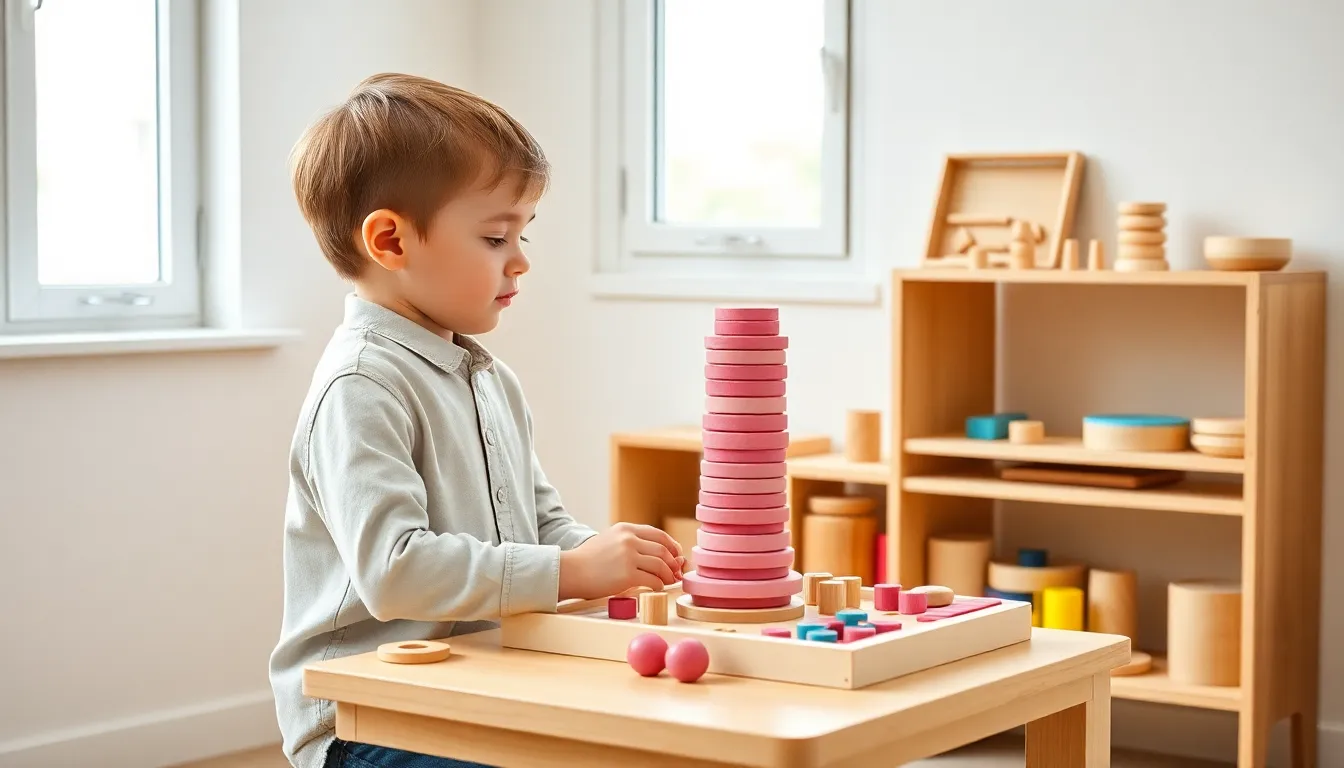
Montessori tools form the foundation of a learning approach that puts children in control of their education. These hands-on materials encourage exploration, build independence, and develop critical thinking skills from an early age. Whether parents are setting up a home learning space or educators are stocking a classroom, understanding these tools makes all the difference. This guide covers the essential Montessori materials, how to select the right ones, and why they work so well for child development.
Table of Contents
ToggleKey Takeaways
- Montessori tools isolate one concept at a time and include built-in error correction, helping children learn independently without adult intervention.
- Practical life and sensorial materials are the two essential categories for beginners, building fine motor skills, concentration, and sensory awareness.
- Choose quality Montessori tools over quantity—start with 2–3 items matched to your child’s developmental stage and current interests.
- Children using Montessori tools at home develop stronger independence, improved concentration, and better problem-solving skills.
- Proper setup matters: use low shelves for easy access and designate a specific spot for each tool to encourage independent learning.
- Consistency is key—even 30 minutes of daily work with Montessori tools produces noticeable developmental benefits.
What Are Montessori Tools?
Montessori tools are specialized learning materials designed by Dr. Maria Montessori in the early 1900s. These tools follow specific principles that set them apart from traditional toys and educational products.
First, Montessori tools isolate one concept at a time. A child learning about size differences works with blocks that vary only in dimension, not color or shape. This focused design helps children grasp concepts without confusion.
Second, these materials include built-in error correction. When a child stacks the Pink Tower incorrectly, the visual result shows the mistake immediately. Children learn to self-correct without adult intervention, building confidence and problem-solving skills.
Third, Montessori tools use real materials. Wood, metal, glass, and fabric replace plastic whenever possible. Children develop respect for their environment and learn to handle objects with care.
The design of Montessori tools also follows a progression from concrete to abstract. Young children work with physical objects they can touch and manipulate. As they grow, these experiences create mental frameworks for understanding abstract concepts like math and language.
Montessori tools differ from regular toys because they serve educational purposes while remaining engaging. A child using Montessori materials doesn’t feel like they’re doing “school work.” Instead, they experience meaningful play that builds real skills.
Key Categories of Montessori Materials
Montessori tools fall into five main categories: practical life, sensorial, language, mathematics, and cultural studies. Each category builds specific skills and follows the child’s developmental stages. Two categories deserve special attention for beginners.
Practical Life Tools
Practical life Montessori tools help children master everyday tasks. These materials look surprisingly simple, small pitchers for pouring, child-sized brooms, button frames, and food preparation sets.
Don’t let the simplicity fool you. Practical life tools build concentration, fine motor control, and sequential thinking. A three-year-old learning to pour water from pitcher to glass develops the same hand movements needed for writing later.
Popular practical life Montessori tools include:
- Pouring sets with various materials (water, rice, beans)
- Dressing frames with buttons, zippers, and laces
- Cleaning supplies sized for small hands
- Food preparation tools like child-safe knives and cutting boards
- Care of self items like small mirrors and grooming tools
These tools also build independence. When children can dress themselves or prepare their own snack, they develop self-confidence that carries into other areas.
Sensorial Materials
Sensorial Montessori tools train the five senses through systematic exploration. Dr. Montessori believed that sensory education forms the basis for intellectual development.
The Pink Tower stands as one of the most recognizable Montessori tools. Ten wooden cubes decrease in size from 10 cm to 1 cm. Children build the tower and absorb concepts of dimension, order, and precision.
Other essential sensorial Montessori tools include:
- Brown Stair (also called Broad Stair) for understanding width
- Color tablets in graded shades for visual discrimination
- Sound cylinders for auditory training
- Geometric solids for spatial awareness
- Touch boards with various textures
Sensorial materials prepare children for math and geometry. The child who has handled geometric solids recognizes shapes intuitively when they appear in textbooks years later.
How to Choose the Right Montessori Tools
Selecting Montessori tools requires attention to quality, age-appropriateness, and the child’s current interests. Here’s how to make smart choices.
Start with observation. Watch the child for a few days. What captures their attention? A child fascinated by opening and closing containers might benefit from practical life tools. One who sorts toys by color shows readiness for sensorial materials.
Prioritize quality over quantity. Authentic Montessori tools cost more than plastic alternatives, but they last for years and often serve multiple children. Cheap imitations lack the precision that makes these materials effective. A poorly made Pink Tower with inconsistent cube sizes defeats the purpose of the exercise.
Match tools to developmental stages. Montessori tools follow a sequence. Practical life materials suit children as young as 18 months. Sensorial materials work best between ages 2.5 and 6. Jumping ahead frustrates children and wastes resources.
Consider your space. Montessori tools need proper storage and display. Low shelves allow children to select materials independently. Each tool needs its own designated spot. Before buying, plan where items will live.
Buy gradually. Many parents feel tempted to purchase complete Montessori tool sets immediately. This approach overwhelms children and strains budgets. Start with two or three items in one category. Add more as the child masters existing materials.
Quality Montessori tools come from specialized educational suppliers, not big-box stores. Research manufacturers and read reviews from experienced Montessori educators before purchasing.
Benefits of Using Montessori Tools at Home
Bringing Montessori tools into the home environment creates lasting benefits for children and families.
Independence grows naturally. Children using Montessori tools learn to work without constant adult direction. They choose their activities, complete tasks at their own pace, and develop intrinsic motivation. Parents often notice reduced requests for help with everyday tasks.
Concentration improves significantly. Montessori tools engage children deeply. A child absorbed in transferring beans with tongs may work for 20 or 30 minutes, unusual focus for young children. This concentration skill transfers to school and other activities.
Fine motor skills develop faster. Many Montessori tools require precise hand movements. Pouring, threading, buttoning, and manipulating small objects strengthen the muscles needed for writing. Children who use these materials often show advanced fine motor control.
Screen time decreases. Montessori tools offer genuinely engaging alternatives to digital entertainment. Children gravitate toward hands-on work when quality materials are available. Many families report significant reductions in screen time after introducing Montessori tools.
Problem-solving becomes habitual. The self-correcting nature of Montessori tools teaches children to identify and fix mistakes independently. They learn that errors provide information rather than reasons for frustration.
Parent-child relationships strengthen. Montessori tools change the adult role from instructor to observer and guide. Parents learn to step back and trust their children’s capabilities. This shift often improves family dynamics beyond learning time.
Consistency matters when using Montessori tools at home. Set up a dedicated workspace, establish simple ground rules, and allow the child regular access to materials. Even 30 minutes of daily Montessori work produces noticeable results.

