
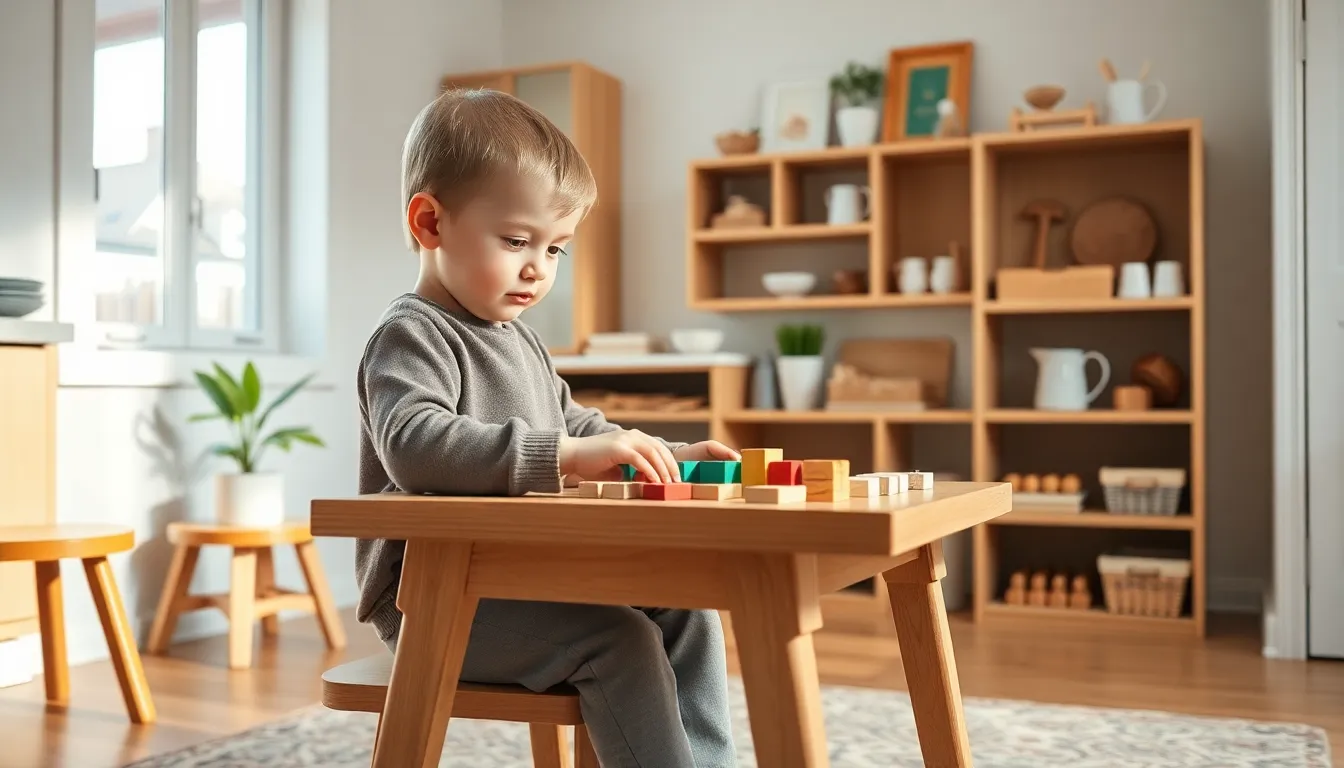
Montessori tips can transform everyday moments into meaningful learning experiences for children. Parents don’t need a fancy classroom or expensive materials to apply these principles at home. The Montessori method focuses on child-led exploration, hands-on activities, and building independence from an early age. These ideas work for toddlers, preschoolers, and elementary-aged kids alike.
This guide covers practical Montessori tips that any family can start using today. From setting up the right environment to knowing when to step back, these strategies help children develop confidence, curiosity, and real-world skills.
Table of Contents
ToggleKey Takeaways
- Create a prepared environment with low shelves and child-sized tools so kids can access materials and build independence.
- Follow your child’s interests by observing what captures their attention and offering related activities.
- Encourage independence by letting children complete age-appropriate tasks themselves, even if it takes longer.
- Use practical life skills like food preparation, cleaning, and self-care as meaningful learning opportunities.
- Protect your child’s concentration by limiting interruptions and avoiding excessive praise during focused activities.
- These Montessori tips work at home without expensive materials—simple adjustments create powerful learning experiences.
Create a Prepared Environment
A prepared environment sits at the core of Montessori philosophy. This means organizing spaces so children can access materials, make choices, and clean up on their own.
Start by looking at the home from a child’s eye level. Can they reach their own clothes? Are toys stored where small hands can grab them? Simple changes make a big difference.
Practical Montessori tips for home setup:
- Use low shelves instead of toy bins. Open shelving lets children see their options and choose activities deliberately.
- Rotate materials every few weeks. Too many choices overwhelm kids. Keep 8–10 activities available and swap them out to maintain interest.
- Place a small table and chair in common areas. This gives children their own workspace for art, puzzles, or snacks.
- Add child-sized tools in the kitchen and bathroom. A step stool, small pitcher, and easy-to-use soap dispenser encourage self-care.
The goal isn’t perfection, it’s accessibility. When children can navigate their space independently, they build confidence and focus.
Follow the Child’s Interests
One of the most powerful Montessori tips involves observation. Parents should watch what captures their child’s attention and build on it.
If a toddler spends 20 minutes examining bugs in the backyard, that’s valuable data. It signals readiness for books about insects, magnifying glasses, or nature walks. Fighting against a child’s natural curiosity wastes energy. Working with it creates motivated learners.
This doesn’t mean letting children run wild. Structure still matters. But within that structure, kids get choices.
For example, a parent might offer two activity options: “Would you like to do the puzzle or the bead threading?” Both choices align with the child’s developmental stage. The child feels respected because they made the decision.
Signs a child is interested in something:
- They return to the same activity repeatedly
- They ask questions about a specific topic
- They try to imitate adults doing certain tasks
- They show frustration when pulled away from an activity
Following interests doesn’t require expensive programs. A child fascinated by cooking can help measure ingredients. A kid obsessed with trucks can sort toy vehicles by size or color. Montessori tips work best when they connect to what children already care about.
Encourage Independence in Daily Activities
Independence is a cornerstone of Montessori education. Children want to do things themselves, often sooner than parents expect.
The phrase “help me do it myself” captures this idea perfectly. Adults shouldn’t do tasks for children that they can do alone. Yes, it takes longer. Yes, there will be spills. But the payoff in self-esteem and capability is worth it.
Montessori tips for building independence:
- Let toddlers dress themselves, even if the shirt ends up backward. Offer guidance only when asked.
- Teach hand-washing step by step, then step back. A visual chart with pictures can serve as a reminder.
- Allow children to pour their own drinks from small pitchers. Spills are learning opportunities, not disasters.
- Give preschoolers responsibility for simple chores like putting dirty clothes in a hamper or feeding pets.
The key is matching tasks to ability. A two-year-old can wipe a table with a damp cloth. A five-year-old can make a simple sandwich. Adjust expectations based on each child’s skill level.
When children accomplish tasks independently, they feel capable. This confidence spills into other areas of learning and problem-solving.
Use Practical Life Skills as Learning Opportunities
Practical life activities form a major part of Montessori classrooms, and they translate easily to home settings. These everyday tasks teach concentration, coordination, and sequencing.
Pouring water, folding towels, and buttoning shirts might seem basic. But for young children, these activities build the fine motor skills needed for writing and the focus required for academic work later.
Examples of Montessori tips using practical life skills:
- Food preparation: Cutting soft fruits with a child-safe knife, spreading butter on bread, or washing vegetables
- Care of environment: Watering plants, sweeping with a small broom, wiping windows
- Care of self: Brushing teeth, combing hair, putting on shoes
- Grace and courtesy: Saying please and thank you, greeting visitors, learning to wait patiently
These activities work because they have a clear beginning, middle, and end. Children can see the results of their efforts immediately. A dirty dish becomes clean. Scattered toys go into their places.
Parents should demonstrate tasks slowly and clearly, then allow children to practice. Mistakes are part of the process. A child who drops an egg while cooking learns more than one who never gets the chance to try.
Limit Interruptions and Allow Concentration
Deep concentration is a gift that Montessori education protects fiercely. When children focus intensely on an activity, they’re building neural pathways and developing attention spans.
Unfortunately, adults often interrupt this flow without realizing it. Praise, questions, and offers of help, even well-meaning ones, can break a child’s concentration.
Montessori tips for protecting focus:
- Observe before speaking. If a child is engaged, wait until they look up or pause naturally.
- Avoid excessive praise during activities. Instead of saying “great job” every few seconds, let the child experience internal satisfaction from completing a task.
- Create dedicated work time. Even 20–30 minutes of uninterrupted activity each day helps children develop focus.
- Reduce background noise. Turn off TVs and limit screens during activity time.
This doesn’t mean ignoring children. It means recognizing when they’re in a productive state and respecting it. The ability to concentrate deeply is increasingly rare in a distraction-filled world. Montessori tips that protect focus give children a real advantage.
When interruptions are necessary, give a gentle warning: “In two minutes, we’ll need to clean up for lunch.” This respects the child’s work while maintaining household routines.

