
Finding the best Montessori program for a child requires research, patience, and a clear understanding of what makes this educational approach unique. Parents often feel overwhelmed by the options available. Some schools claim Montessori status without following authentic methods. Others deliver exceptional experiences that shape lifelong learners.
This guide breaks down the essential factors that separate outstanding Montessori programs from average ones. Readers will learn what features to look for, how to evaluate local options, and which questions to ask during school visits. Whether a family is exploring early childhood education or considering Montessori for an elementary-aged child, this resource provides practical tools for making an well-informed choice.
Table of Contents
ToggleKey Takeaways
- The best Montessori programs feature child-led learning, mixed-age classrooms, and authentic materials designed by Maria Montessori.
- Look for teachers with AMI or AMS certifications, which require 400+ hours of specialized training.
- Quality Montessori schools protect uninterrupted work periods of two to three hours to allow deep engagement.
- Check accreditation status through the American Montessori Society (AMS) or Association Montessori Internationale (AMI) to verify authentic methods.
- Schedule in-person classroom observations and talk with current families to evaluate the best Montessori fit for your child.
- Prepare specific questions about teacher credentials, discipline approaches, and student progress tracking before school visits.
What Makes a Montessori Program Stand Out
The best Montessori programs share certain characteristics that set them apart from traditional education and from schools that only use the Montessori name.
Authentic Montessori education centers on child-led learning. Students choose their activities from a prepared environment. Teachers act as guides rather than lecturers. This approach respects each child’s natural development pace and interests.
Mixed-age classrooms define genuine Montessori settings. Children typically span a three-year age range within one classroom. Younger students learn from older peers. Older children reinforce their knowledge by teaching concepts they’ve mastered. This setup builds community and reduces competition.
Specialized materials also distinguish quality programs. Maria Montessori designed specific learning tools that move from concrete to abstract concepts. The pink tower, golden beads, and moveable alphabet serve precise educational purposes. The best Montessori schools invest in these authentic materials and train teachers to use them properly.
Accreditation matters significantly. Organizations like the American Montessori Society (AMS) and Association Montessori Internationale (AMI) certify schools that meet strict standards. These credentials signal commitment to authentic methods.
Key Features of Top Montessori Schools
Parents searching for the best Montessori experience should look for specific features during their evaluation process.
Trained and Certified Teachers
Quality programs employ teachers with Montessori-specific credentials. AMI and AMS certifications require extensive training, often 400+ hours of coursework plus supervised practice. Teachers should hold certification for the age group they instruct.
Prepared Environment
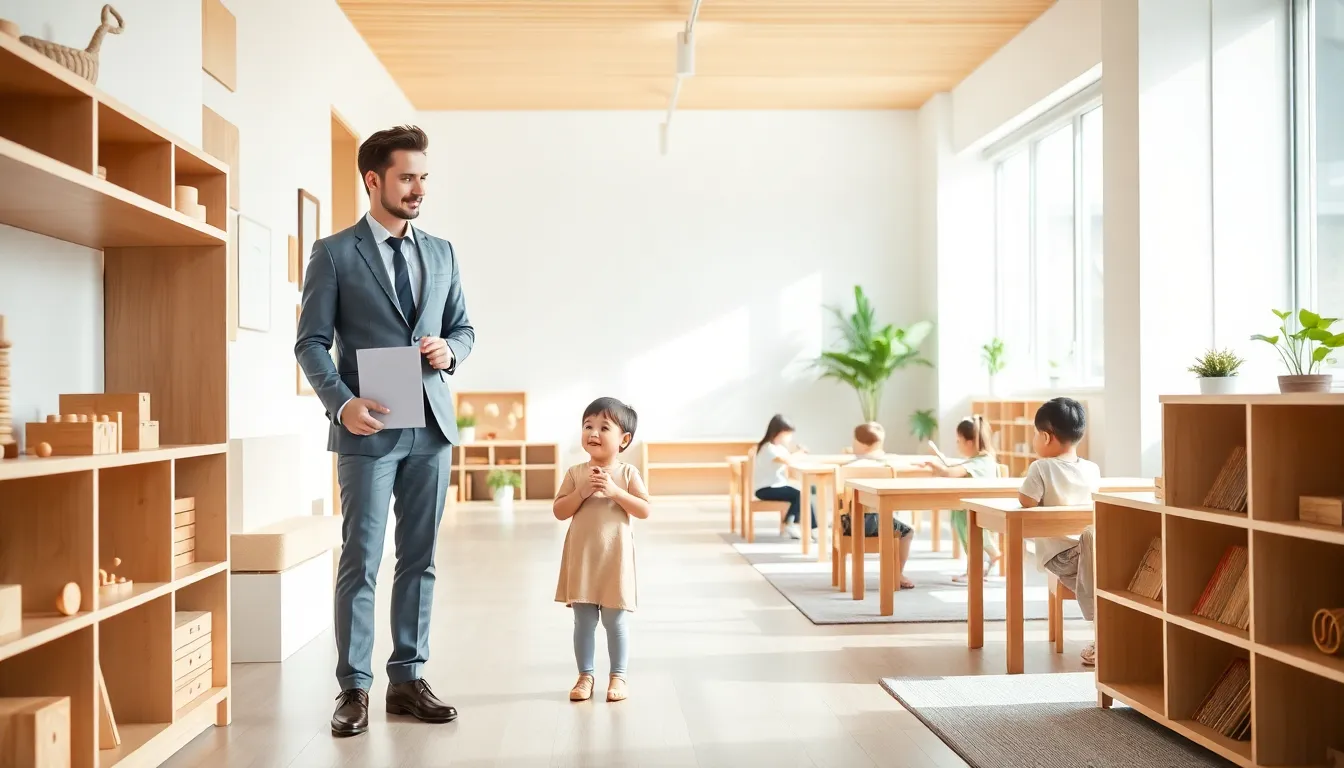
Classrooms should feel organized, calm, and purposeful. Materials sit on low, accessible shelves. Each item has a designated place. The space invites exploration without overwhelming children. Natural light, plants, and child-sized furniture create a welcoming atmosphere.
Uninterrupted Work Periods
The best Montessori programs protect blocks of uninterrupted work time, typically two to three hours. Children need this extended time to choose activities, engage deeply, and complete work cycles. Frequent interruptions undermine the Montessori method’s effectiveness.
Low Student-to-Teacher Ratios
Smaller class sizes allow teachers to observe individual children and provide personalized guidance. Most quality programs maintain ratios of 10:1 or better for younger children and slightly higher for elementary students.
Parent Involvement Opportunities
Top schools encourage parent participation through observation days, workshops, and volunteer opportunities. Strong home-school connections reinforce learning and help families understand Montessori principles.
How to Evaluate Montessori Programs Near You
Finding the best Montessori school requires active investigation. Online research provides a starting point, but in-person visits reveal the true picture.
Schedule classroom observations during regular school hours. Watch how teachers interact with students. Notice whether children move freely and choose their own activities. Observe the noise level, productive hum differs from chaos or forced silence.
Ask about teacher credentials and tenure. High staff turnover can indicate problems. Experienced Montessori teachers bring valuable expertise and create classroom stability that benefits students.
Review the daily schedule. Authentic programs prioritize long work periods over fragmented activities. Be cautious of schools that interrupt learning frequently for group lessons, assemblies, or transitions.
Check accreditation status through AMI or AMS databases. Membership in these organizations demonstrates commitment to Montessori standards. But, some excellent schools operate independently, so accreditation alone shouldn’t determine the decision.
Talk with current families. Their experiences offer honest insights about communication, community culture, and how the school handles challenges. Parent satisfaction often correlates with program quality.
Consider practical factors too. Location, hours, tuition, and available financial aid all affect whether a program works for a specific family’s needs.
Age-Appropriate Montessori Options
The best Montessori programs structure classrooms around developmental stages. Understanding these levels helps parents find appropriate options.
Infant and Toddler Programs (Birth to Age 3)
These programs focus on movement, language development, and independence skills. Children work with simple materials that develop coordination and sensory awareness. The environment supports crawling, walking, and early self-care activities like feeding and dressing.
Primary or Children’s House (Ages 3-6)
This level introduces the full range of Montessori materials across five curriculum areas: practical life, sensorial, language, mathematics, and cultural studies. Children develop reading, writing, and math foundations through hands-on work. Most students spend three years in this environment, with the final year serving as a leadership opportunity.
Elementary (Ages 6-12)
Elementary Montessori expands into cosmic education, the interconnected study of history, science, geography, and culture. Students pursue research projects, work collaboratively, and develop abstract thinking. Many programs split elementary into lower (6-9) and upper (9-12) levels.
Adolescent Programs (Ages 12-18)
Fewer Montessori options exist for teenagers, but growing interest has expanded availability. These programs emphasize real-world application, community involvement, and preparation for adult responsibilities. Students often engage in entrepreneurial projects or work experiences.
Questions to Ask Before Enrolling
Prepared questions help parents gather essential information during school visits. These inquiries reveal whether a program represents the best Montessori fit for a particular child.
About Teacher Qualifications:
- What Montessori credentials do your teachers hold?
- Where did they complete their training?
- How long have they worked at this school?
About Classroom Practice:
- How long are uninterrupted work periods?
- How do teachers handle discipline?
- What happens if a child struggles with a concept?
About Curriculum and Assessment:
- How do you track student progress?
- Do you follow state academic standards?
- How do students transition to traditional schools if needed?
About School Operations:
- What is your teacher-to-student ratio?
- How do you communicate with parents?
- What parent involvement opportunities exist?
About Philosophy:
- How strictly do you follow Montessori methods?
- What aspects of traditional education have you incorporated?
- How do you handle technology in the classroom?
Listen carefully to responses. Vague answers or defensive reactions may signal problems. The best Montessori programs welcome questions and explain their practices clearly.

