
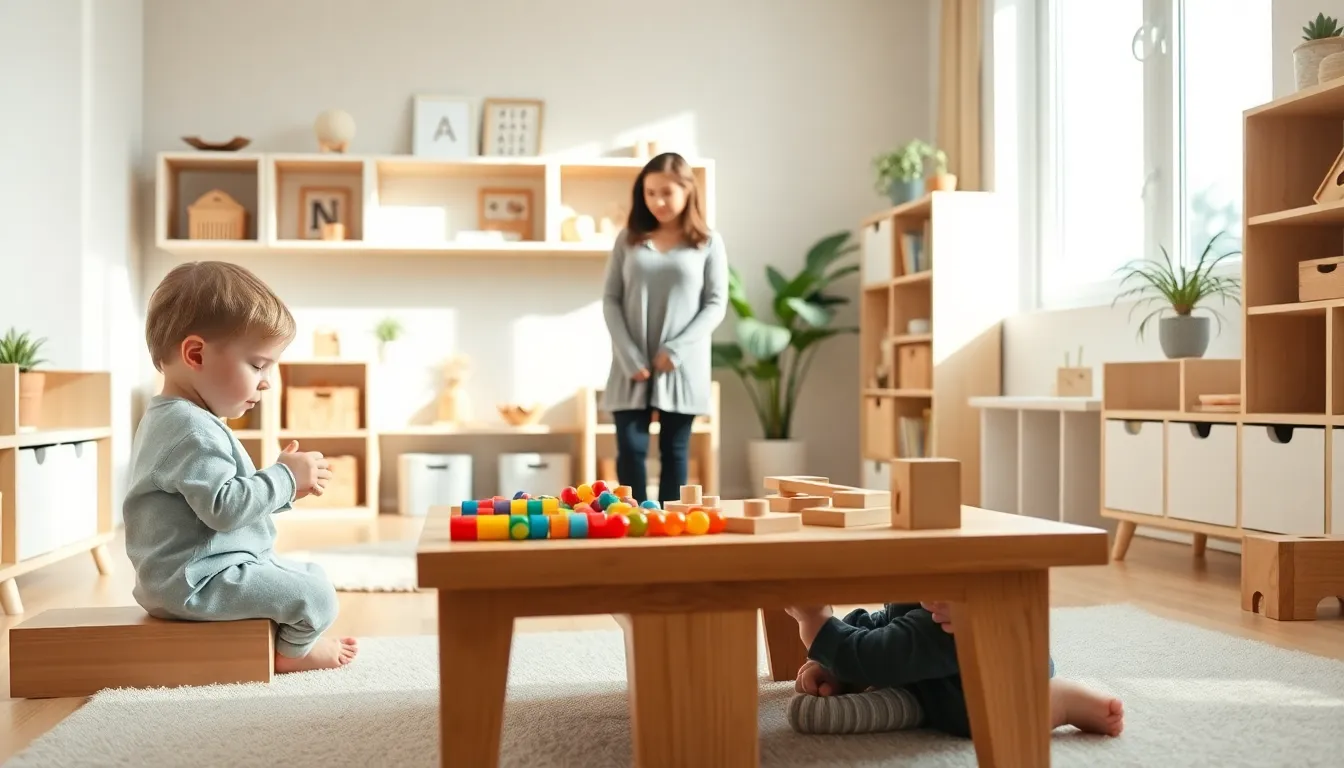
What is Montessori? This question has sparked curiosity among parents and educators for over a century. The Montessori method is an educational approach that emphasizes independence, hands-on learning, and respect for a child’s natural development. Dr. Maria Montessori developed this philosophy in the early 1900s, and it continues to shape how millions of children learn today.
Unlike traditional schooling, Montessori education places children at the center of their learning experience. Students choose their activities, work at their own pace, and develop skills through direct interaction with carefully designed materials. This guide explains the origins, principles, classroom structure, and benefits of Montessori education to help parents understand whether this approach fits their child.
Table of Contents
ToggleKey Takeaways
- Montessori is an educational method developed by Dr. Maria Montessori in 1907 that emphasizes independence, hands-on learning, and respect for each child’s natural development.
- Unlike traditional schooling, Montessori classrooms feature mixed-age groupings, child-selected activities, and uninterrupted work periods of two to three hours.
- Research shows Montessori students often demonstrate stronger gains in reading, math, social skills, and executive function compared to peers in conventional schools.
- Hands-on Montessori materials teach abstract concepts through concrete experiences, helping children develop deep understanding rather than surface memorization.
- When evaluating Montessori programs, look for accreditation from AMI or AMS to ensure quality teacher training and classroom standards.
- Montessori education benefits compound over time, so children who stay in the program longer typically experience the greatest developmental advantages.
The Origins of the Montessori Method
Dr. Maria Montessori created the Montessori method in Rome, Italy, in 1907. She was one of Italy’s first female physicians and brought a scientific perspective to education. Her first school, Casa dei Bambini (Children’s House), served children from low-income families in the San Lorenzo district.
Montessori observed something remarkable. When given freedom to choose their activities and access to appropriate materials, children became deeply engaged learners. They developed concentration, self-discipline, and a genuine love for learning, without rewards or punishments.
Her observations led to key insights about child development. Children pass through sensitive periods when they’re especially receptive to learning specific skills. A three-year-old might show intense interest in language, while a four-year-old focuses on order and patterns. Montessori designed her method to support these natural developmental stages.
The Montessori approach spread quickly across Europe and reached the United States by 1911. Today, over 20,000 Montessori schools operate worldwide. The method has influenced mainstream education practices, including multi-age classrooms, hands-on learning, and student-led activities.
Core Principles of Montessori Education
Several fundamental principles define Montessori education and set it apart from conventional schooling.
Child-Centered Learning
Montessori classrooms treat children as capable individuals who can direct their own education. Teachers observe each student and provide guidance rather than delivering lectures. Children select activities based on their interests and readiness.
Prepared Environment
Every element in a Montessori classroom serves a purpose. Furniture matches children’s sizes. Materials sit on low shelves within easy reach. The space promotes independence, children can access what they need without adult help.
Hands-On Materials
Montessori materials engage multiple senses and teach abstract concepts through concrete experiences. A child learns math by manipulating beads and blocks before working with numbers on paper. Each material isolates one concept and includes built-in error control, so children can self-correct.
Mixed-Age Groupings
Montessori classrooms typically combine children spanning three years, ages 3-6, 6-9, or 9-12. Younger children learn from older peers. Older children reinforce their knowledge by teaching concepts to younger classmates. This structure mirrors real-world social environments.
Uninterrupted Work Periods
Children receive long blocks of time, often two to three hours, to work without interruption. This allows deep concentration and flow states that shorter periods can’t achieve. A child might spend 45 minutes perfecting a puzzle or exploring a single concept.
How Montessori Classrooms Are Structured
Walking into a Montessori classroom looks different from entering a traditional school. Desks don’t face a chalkboard in rows. Instead, children work at tables, on rugs, or in small groups throughout the room.
The physical space divides into distinct learning areas:
- Practical Life: Activities like pouring, buttoning, and food preparation build fine motor skills and independence
- Sensorial: Materials help children refine their senses and understand qualities like size, weight, and texture
- Language: Letter cards, moveable alphabets, and writing materials support literacy development
- Mathematics: Counting beads, number rods, and geometric shapes make abstract math concepts concrete
- Cultural Studies: Geography, science, art, and music materials encourage exploration of the wider world
Montessori teachers hold a different role than conventional instructors. They’re called “guides” because they observe, prepare the environment, and offer lessons when children show readiness. A guide might present a new material to one child, then step back while that child practices independently.
The daily schedule reflects Montessori principles. Morning typically includes a three-hour work cycle where children choose their activities. Group gatherings happen for songs, stories, or lessons. Outdoor time and lunch provide natural breaks.
Montessori schools follow this structure from toddler programs through high school, though the specific materials and activities evolve with each developmental stage.
Benefits of Montessori Learning
Research supports many benefits associated with Montessori education. A 2017 study published in Frontiers in Psychology found that Montessori students showed greater gains in reading, math, and social skills compared to peers in traditional schools.
Academic Achievement
Montessori students often develop strong foundational skills. The hands-on approach builds deep understanding rather than surface memorization. Children frequently read and perform math operations earlier than traditionally educated peers.
Executive Function Skills
Planning, focus, and self-regulation improve through Montessori’s emphasis on independent work. Children practice making choices, managing their time, and completing multi-step tasks. These executive function skills predict success in school and life.
Intrinsic Motivation
Without grades, gold stars, or external rewards, Montessori children develop internal motivation. They work because they find activities interesting and satisfying, not because someone promised a prize. This intrinsic motivation often persists into adulthood.
Social Development
Mixed-age classrooms create natural opportunities for leadership, collaboration, and empathy. Older children mentor younger ones. Younger children have role models. Conflict resolution happens through conversation rather than adult intervention.
Creativity and Problem-Solving
Montessori education encourages creative thinking. Children experiment with materials, discover solutions, and approach challenges from multiple angles. The freedom to make mistakes and try again builds resilience.
Notable Montessori alumni include Google founders Larry Page and Sergey Brin, Amazon founder Jeff Bezos, and Wikipedia founder Jimmy Wales. While Montessori didn’t guarantee their success, these innovators credit their education with fostering curiosity and independent thinking.
Is Montessori Right for Your Child?
Montessori education works well for many children, but it’s not the only valid approach. Several factors help parents determine fit.
Consider Your Child’s Personality
Some children thrive with freedom to choose their activities. Others feel overwhelmed without more structure. A child who already shows curiosity and self-direction may flourish in Montessori settings. Children who need frequent adult guidance might require time to adjust.
Evaluate Available Programs
Montessori quality varies significantly. The name “Montessori” isn’t trademarked, so any school can use it. Look for programs accredited by the Association Montessori Internationale (AMI) or the American Montessori Society (AMS). These organizations verify teacher training and classroom standards.
Think About Continuity
Montessori benefits compound over time. A child who attends from ages three through twelve experiences the full developmental sequence. Starting at age three and switching to traditional school at six provides less advantage.
Visit Classrooms
Observation reveals more than brochures. Watch how teachers interact with students. Notice whether children seem engaged and peaceful. Ask questions about curriculum, assessment, and daily routines.
Understand the Transition
Children who move from Montessori to traditional schools typically adjust well. They may initially miss the freedom and hands-on materials, but their strong academic foundations and self-management skills serve them in any environment.
Montessori education represents one approach among many. Parents should weigh their child’s needs, available options, and family values when making educational decisions.

