
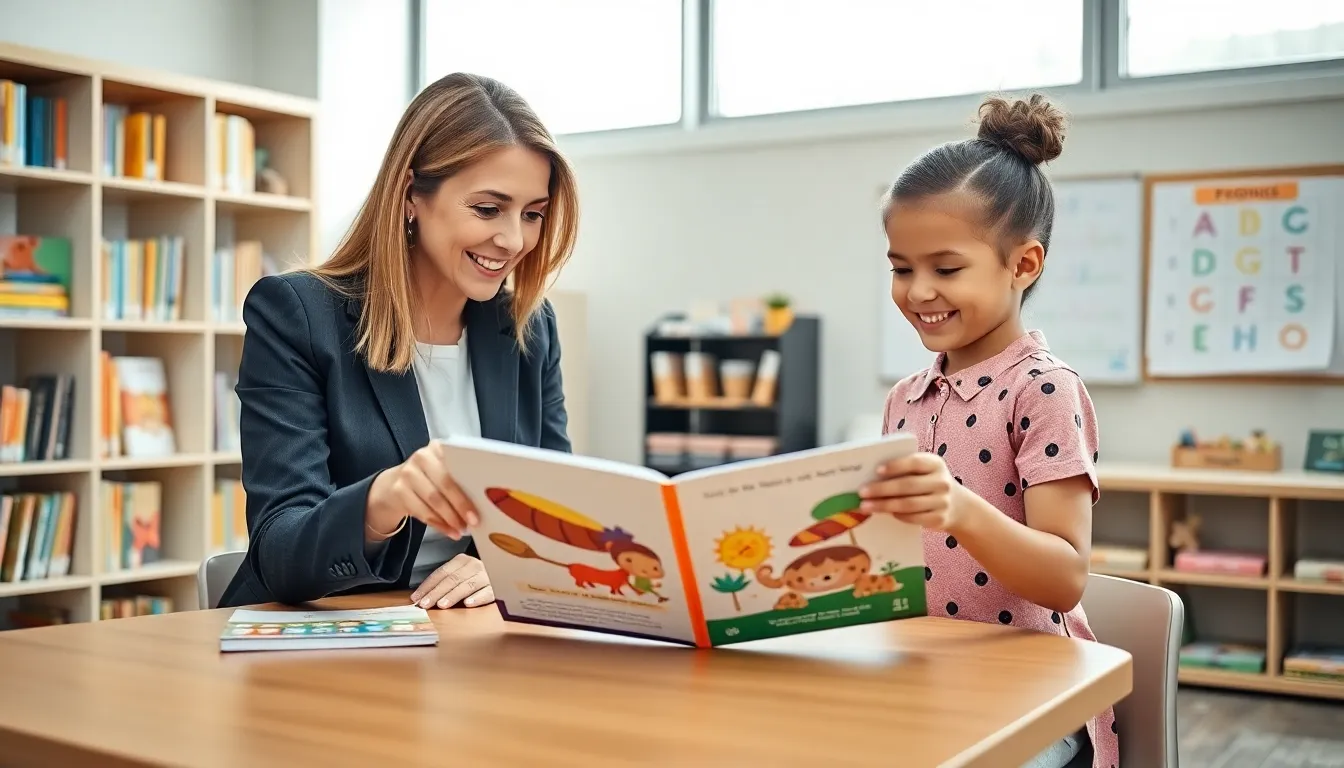
Reading and literacy development strategies shape how people learn, think, and grow throughout their lives. Strong literacy skills open doors to education, career success, and personal fulfillment. Yet many learners struggle to build these essential abilities without the right support.
This guide explores proven approaches to literacy development. It covers foundational skills, early reading techniques, comprehension building, and support for struggling readers. Parents, educators, and learners will find practical methods they can apply immediately.
Table of Contents
ToggleKey Takeaways
- Reading and literacy development strategies build on five core foundations: phonemic awareness, phonics, fluency, vocabulary, and comprehension.
- Early readers thrive with varied approaches like read-alouds, shared reading, guided reading, and independent reading time.
- Vocabulary instruction works best when new words are taught in meaningful contexts rather than through rote memorization.
- Struggling readers benefit from explicit instruction, systematic skill progression, intensive practice, and immediate feedback.
- Creating literacy-rich environments at home, school, and in the community reinforces the importance of reading and builds lifelong habits.
- Early identification of reading difficulties allows for timely intervention and significantly improves outcomes for struggling learners.
Understanding the Foundations of Literacy
Literacy development begins with core building blocks that support all future reading success. These foundations include phonemic awareness, phonics, fluency, vocabulary, and comprehension.
Phonemic awareness helps learners recognize and manipulate individual sounds in words. A child who can hear that “cat” contains three distinct sounds has developed this skill. Research shows phonemic awareness is one of the strongest predictors of reading success.
Phonics connects sounds to written letters and letter combinations. When students learn that “ph” makes an “f” sound, they can decode unfamiliar words independently. This skill transforms struggling readers into confident ones.
Fluency refers to reading with speed, accuracy, and proper expression. Fluent readers don’t stumble over words, they read smoothly enough to focus on meaning. Without fluency, comprehension suffers because too much mental energy goes toward decoding.
These reading and literacy development strategies work together like building blocks. Each skill supports the next. Skip one, and the whole structure becomes unstable.
Effective Strategies for Early Readers
Early readers benefit from specific, targeted approaches that build confidence and skill simultaneously. The following strategies have proven effective across diverse learning environments.
Read-Alouds: Adults reading to children models proper fluency and introduces new vocabulary in context. Children hear how sentences flow and learn that books contain interesting ideas worth exploring.
Shared Reading: Teacher and students read together from the same text. The adult provides support while gradually releasing responsibility to learners. This approach bridges the gap between listening and independent reading.
Guided Reading: Small groups of similar-ability readers work with an instructor on texts at their level. The teacher observes, prompts, and teaches specific skills as students read.
Independent Reading Time: Students choose books that interest them and read at their own pace. This practice builds stamina and reinforces that reading is enjoyable, not just an assignment.
Effective reading and literacy development strategies for early learners also include multisensory techniques. Some children learn letter sounds better when they trace letters in sand while saying the sound aloud. Others benefit from color-coded phonics systems.
Building Comprehension and Vocabulary Skills
Decoding words means little if readers don’t understand what they’ve read. Strong comprehension and vocabulary skills transform word recognition into actual learning.
Vocabulary instruction works best when students encounter words in meaningful contexts. Simply memorizing definitions rarely sticks. Instead, effective reading and literacy development strategies connect new words to concepts students already understand. A student learning “enormous” might compare it to “big” and “gigantic,” building a web of related meanings.
Comprehension strategies give readers tools for understanding:
- Predicting: Readers guess what might happen next based on clues in the text
- Questioning: Students ask themselves questions before, during, and after reading
- Summarizing: Learners identify main ideas and retell key points in their own words
- Visualizing: Readers create mental pictures of what they’re reading
- Making Connections: Students link text to their own experiences, other books, or world events
Teaching these strategies explicitly makes a difference. Students need to see how skilled readers use these tools, practice them with support, and then apply them independently. The gradual release model, “I do, we do, you do”, works well here.
Discussion also builds comprehension. When students talk about what they’ve read, they process ideas more deeply and hear perspectives they might have missed.
Supporting Struggling Readers
Some learners need additional support to develop strong literacy skills. Struggling readers aren’t less intelligent, they often need different approaches or more intensive instruction.
Early identification matters. The sooner educators spot reading difficulties, the more effectively they can intervene. Warning signs include difficulty rhyming, trouble remembering letter names, slow progress even though good instruction, and avoiding reading activities.
Effective interventions share common features:
- Explicit instruction: Teachers directly explain skills rather than hoping students will figure them out
- Systematic progression: Skills build in a logical sequence from simple to complex
- Intensive practice: Struggling readers need more repetition than their peers
- Immediate feedback: Students learn faster when errors are corrected right away
One-on-one tutoring produces strong results for struggling readers. Programs like Reading Recovery have decades of research supporting their effectiveness. These reading and literacy development strategies work because they target individual student needs.
Technology can also help. Text-to-speech software, audiobooks, and reading apps provide additional practice opportunities. Some struggling readers engage more readily with digital formats than traditional books.
Patience matters too. Progress may come slowly, but consistent effort pays off. Many successful adults were once struggling readers who received the right support at the right time.
Creating a Literacy-Rich Environment
The physical and social environment shapes reading development. Literacy-rich spaces encourage reading habits and reinforce that literacy matters.
At home, families can:
- Keep books accessible throughout the house
- Read together daily, even after children can read independently
- Discuss books at dinner or during car rides
- Let children see adults reading for pleasure
- Visit libraries regularly
In classrooms, teachers can:
- Create inviting reading corners with comfortable seating
- Display student writing and reading responses
- Label classroom objects to build print awareness
- Maintain diverse classroom libraries representing varied interests and reading levels
- Celebrate reading achievements
Reading and literacy development strategies extend beyond formal instruction. Environmental print, signs, menus, labels, offers real-world reading practice. Pointing out words during errands shows children that reading serves practical purposes.
Digital environments matter too. Curating quality reading apps and websites extends literacy learning beyond school hours. But, screen time should complement, not replace, physical books and face-to-face reading experiences.
Communities can support literacy through library programs, reading initiatives, and book drives. When an entire community values reading, children receive consistent messages about literacy’s importance.

